

How does an 18th-century peace treaty inform conversations about diplomacy, belief, and public life?
PRAY FIRST for discernment to engage complex historical issues without fear, reaction, or oversimplification.
Give me understanding, that I may keep your law and observe it with my whole heart. Psalm 119:34
When Americans reflect on the nation’s early diplomacy, the 1797 Treaty of Tripoli rarely tops the list. Yet this little-discussed agreement offers a window into how the young republic navigated global threats, religious pluralism, and the practical demands of survival. Its history also provides a thoughtful space for Christians today to consider how faith and civic life can coexist without fear or rivalry.
Understanding the World of 1797
In the late 18th century, the U.S. was a fledgling nation with limited naval protection and extensive maritime trade routes. American ships traveling through the Mediterranean faced frequent attacks from the Barbary States—semi-autonomous North African provinces of the Ottoman Empire, including Tripoli, Algiers, Tunis, and Morocco. These states financed themselves in part by capturing foreign vessels and demanding tribute.
Without a strong navy, the U.S. relied on diplomacy to protect its sailors and commerce. This led to negotiations under President George Washington and later President John Adams—efforts intended to stop the seizure of American crews and stabilize trade in the region. Envoys Joel Barlow and Joseph Donaldson carried out negotiations, and in 1797 the U.S. Senate unanimously ratified the Treaty of Tripoli. For the United States, the goals were safety, predictable trade, and peace. For Tripoli, the treaty offered financial tribute and diplomatic recognition.
The Controversial Article 11
Among its provisions, the English version of Article 11 contains a sentence that continues to spark debate: “the Government of the United States of America is not in any sense founded on the Christian religion.” In context, this clause assured Tripoli—a Muslim-majority polity—that the U.S. held no religious animosity and did not consider itself a religious combatant. Scholars generally agree it was intended to preempt conflict, not to define American theology.
However, the controversy deepens because several historians pointed out that the surviving Arabic manuscript appears to omit what appears in the English version. Others suggested the Arabic text may have been lost, miscopied, or translated inconsistently. Regardless, the clause made sense diplomatically in an era where religious wars often shaped foreign alliances.
While the diplomatic record does not fully explain the drafters’ intentions, many historians interpret Article 11 as a practical gesture directed at keeping the treaty within the realm of politics rather than theology.
How Article 11 Is Used Today
In modern debates, Article 11 is sometimes cited to argue that the United States was founded as a secular nation. Supporters note that the U.S. Senate—including many devout Christians of the era—ratified the treaty unanimously, suggesting they found the language consistent with American principles.
Critics respond that even if the English version is accurate, it should not be taken as a foundational statement. They point out that the founders’ writings reflect a range of religious beliefs and stress that one diplomatic clause cannot substitute for constitutional interpretation or theological analysis.
Today, the clause often appears in debates about church–state separation, sometimes used thoughtfully and sometimes selectively. Its complexity reminds us that history resists simple slogans.
Faith, Citizenship, and What the Treaty Means Now
Legally, the Treaty of Tripoli has no authority today. It was replaced by a later treaty in 1805, and it can’t shape constitutional meaning. But historically, it offers insight into how early American leaders balanced diplomacy, national security, and religious difference.
For Christians, Article 11 need not be threatening or discomforting. It does not challenge faith, nor does it define it. Instead, it reflects diplomatic prudence in a volatile world. Rather than viewing the clause as hostile or affirming, we can see it as evidence that early Americans were capable of engaging respectfully with those who did not share their faith.
Reflecting on the treaty also encourages us to consider how we interact with complex ideas today. The early republic navigated uncertainty, disagreement, and external pressure—conditions not unfamiliar to modern citizens.
Federal Decisions
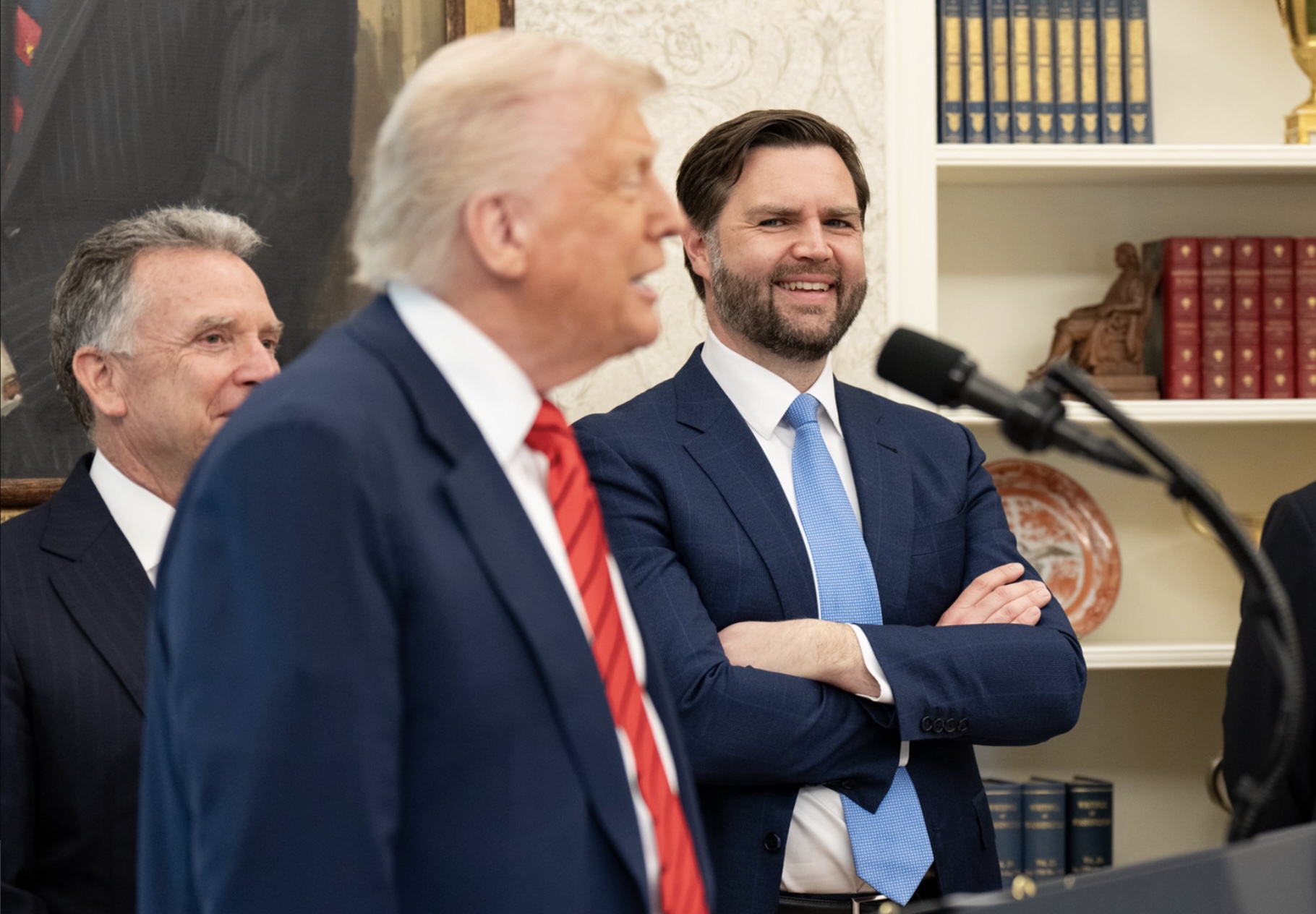
In 2025, President Donald Trump and other federal officials have focused on protecting religious liberty, particularly for Christians who feel targeted by bias in government institutions. President Trump issued an executive order in February 2025 directing agencies to identify and eliminate anti-Christian discrimination. First Amendment rights initiatives have included a federal task force to investigate bias and workplace guidance affirming that employees may freely express their faith without fear of retaliation.
These measures highlight a tension between promoting religious liberty and avoiding favoritism toward one faith. While they emphasize Christianity’s cultural significance, they do not legally establish it as a national religion. The First Amendment’s Establishment Clause remains a constitutional safeguard, preventing Congress from endorsing or instituting any religion. Thus, the government’s conversation in 2025 has leaned toward protecting Christian expression, rather than a formal establishment.
Taken together, the 2025 actions and the Treaty of Tripoli illustrate two different approaches to religion in American governance. The treaty emphasized neutrality, while current policies emphasize the protection of Christian expression. Both, however, operate within the same constitutional framework: a government that cannot establish a religion but can safeguard the free exercise of faith. This ongoing balance between liberty and neutrality remains central to America’s identity.
Why It Matters and How We Can Respond
Paying attention to this treaty helps us practice careful, charitable engagement with history. It invites us to resist reactive interpretations, to ask questions before assuming motives, and to cultivate conversations marked by grace rather than suspicion. As Proverbs reminds us, “the simple believes everything, but the prudent gives thought to his steps” (Prov. 14:15).
When challenged by interpretations that differ from our own, we can model depth, patience, and discernment.
HOW THEN SHOULD WE PRAY: — Pray for those in our federal government as they navigate the complex issues of foreign policy and domestic issues while balancing constitutional rights. Let your reasonableness be known to everyone. Philippians 4:5
— Pray for a spirit of gentleness when discussing church–state issues, especially when encountering differing views. He is the stability of your times. Isaiah 33:6
CONSIDER THESE ITEMS FOR PRAYER:
- Pray for humility when discussing complex topics.
- Pray those in our nation’s leadership to have courage to speak truth without harshness or bias.
- Pray for the continued protection and preservation of religious freedom in America.
Sources: White House, Office or Personnel Management, United States Conference of Catholic Bishops, GovInfo, University of Connecticut School of Law, Washington Report on Middle East Affairs, Early America Review, Yale Law School, BackStory Radio, Free Speech Center at Middle Tennessee State University, Christian Heritage Ministry